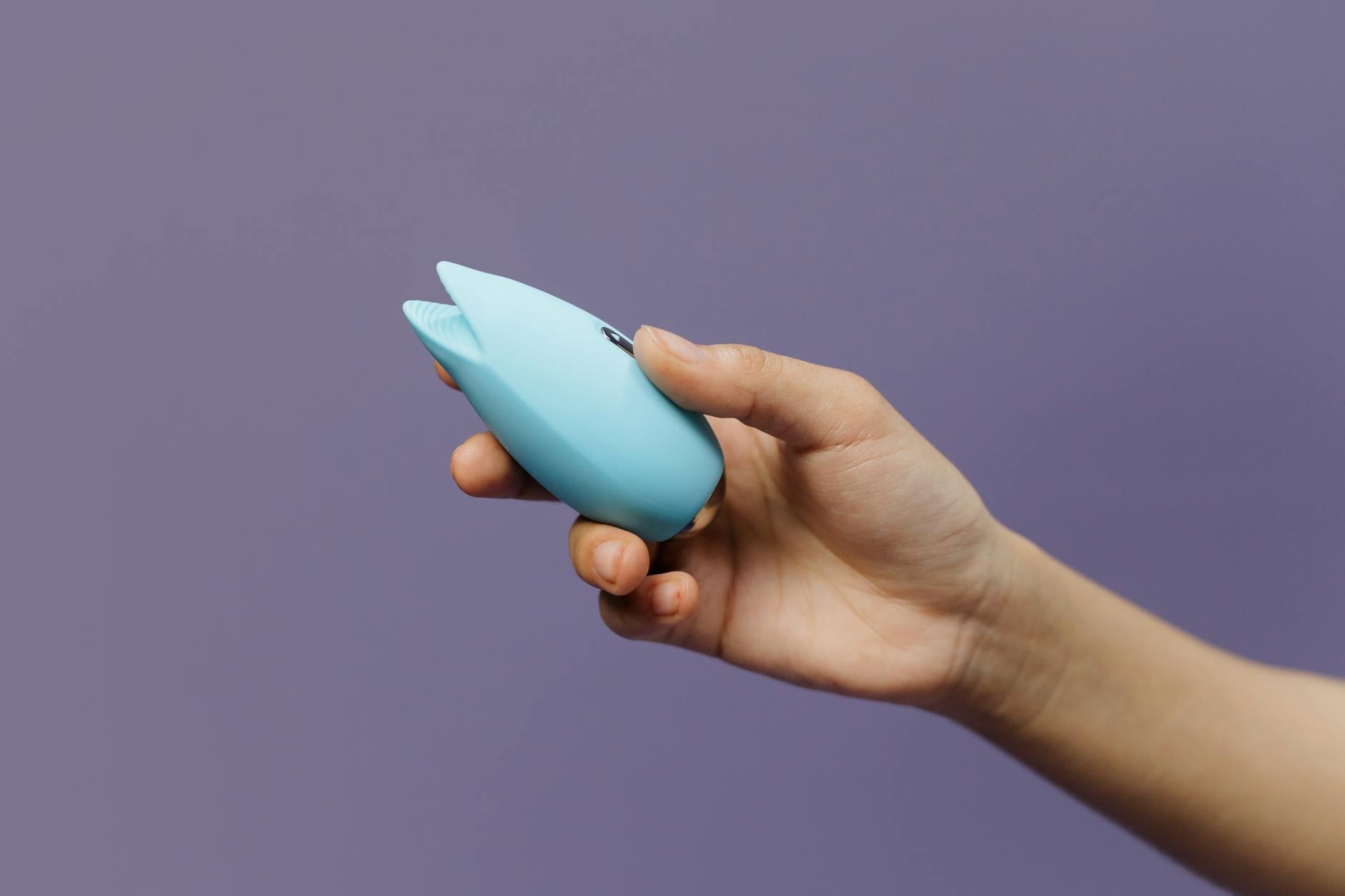
Why this conversation matters (and why you're overthinking it)
Let's be real. You've been thinking about bringing up a lemon vibrator with your partner for weeks. Maybe months. You've drafted the sentence in your head a hundred times, imagined every response, talked yourself out of it. Here's the thing: your partner probably won't react the way you think they will. Most people hear "I want us to try something together" and think that's... actually kind of hot.
The nervousness you're feeling isn't about the toy. It's about vulnerability. You're about to say "my pleasure matters enough to ask for it," and that's genuinely brave. But it's also completely doable.
The setup matters more than the words
Timing and setting change everything. Don't ambush this conversation right before bed when you're both tired, and definitely not during an argument about something else. Save it for a moment when you're both relaxed, fed, and in a decent mood. A car ride works weirdly well because there's no face-to-face pressure. A walk outside, too.
The goal is casual enough that you both feel safe, but intentional enough that they know you've thought about this. "Hey, I wanted to talk about something with you" signals that this matters. It doesn't signal crisis.
What to actually say (three versions, pick your vibe)
Version 1 is direct and simple: "I've been curious about trying something new together sexually. I want to explore using a lemon vibrator with you. I think it could feel really good, and I'd like to see if you're interested."
Version 2 is softer: "I read something about lemon clitoral vibrators recently and got intrigued. Have you ever thought about using toys together? I'm curious to try one with you if you'd be open to it."
Version 3 is flirty: "I have an idea for something that might make our sex life more fun. It involves you, me, and a lemon vibrator. Want to hear about it?"
Pick whichever one sounds least awkward coming out of your mouth. Your authentic voice matters more than the exact words. The script is just a container.
What partners actually worry about (and how to answer)
Most people have one of three concerns. Knowing what they are helps you address them before they even ask.
Concern 1: "Does this mean I'm not enough?" The answer is no, and say it like you mean it. "This isn't about you not being enough. It's about us exploring something together that turns us both on. Think of it like... we're on the same team, not competing." A lemon vibrator is collaborative, not a replacement. Frame it that way.
Concern 2: "I don't know how to use it." This one's easy to solve. "We can figure it out together. There's no right way to do this. It's all about what feels good." Offer to show them, or read the instructions together like it's a fun secret. Normalize the learning curve.
Concern 3: "What if we try it and it's weird?" Completely fair. "Then we stop and do something else. No pressure, no judgment. I just want to try." Give them the out before they ask for it. It makes them more likely to say yes.
The first time using a lemon vibrator together
Don't make it a big production. You don't need candles and a speech. Just... try it. Start somewhere you both feel comfortable. Many couples prefer foreplay first, so the clitoral vibrator enters the picture when everyone's already interested. Some prefer it from the beginning.
Here's what makes it go smoothly: start on a low setting. Let your partner watch what you like. Guide their hand if they're holding it. Tell them what feels good out loud, because "lower, left, a bit faster" is way sexier than silent hoping. This is information they need, and hearing it turns most people on.
If it feels awkward the first time, that's normal. Second time usually feels less performative. By the third time, it's just part of what you do together. The awkwardness isn't failure. It's part of the learning curve.
What happens after the conversation
They might say yes immediately. They might say "let me think about it." They might ask questions. All of those are fine. If they seem hesitant, don't push. Give them space to come to it, and circle back in a few days with no pressure.
If they say no, that's information too. Ask why. Is it genuine discomfort, or is it nerves? Does it feel shameful to them? Is there a different toy or approach they'd prefer? Sometimes the issue isn't the lemon vibrator itself. It's something about the conversation that triggered a boundary or worry. Dig into that gently.
Most partners, when given the opening, are way more into this than you expected. People want to make their partners feel good. A lemon clitoral vibrator is just a tool that makes that easier. Once it's in the room and everyone's agreed, the actual use part feels less scary than the asking part ever did.
The biggest mistake couples make
They introduce the toy and then expect it to solve relationship problems. A lemon vibrator can improve your sex life. It can't improve your communication, your emotional intimacy, or a struggling partnership. If you're using this as a fix for something deeper, pump the brakes and do that work first.
But if your sex life is already good and you just want to add something new? This is exactly what it's for. And the conversation itself is often the sexiest part. Saying "I want this, and I want it with you" is vulnerability that builds trust. That's the real win.
People also ask
How do I bring up a lemon vibrator if we've never used toys before?
Start smaller if you need to. You don't have to jump straight to a clitoral vibrator. Some couples try a simple vibrator first, or discuss it in general before committing. But honestly? Many people's first toy is a lemon vibrator because they work well, feel less intimidating than other options, and have that suction technology that feels completely different from what a partner can do with their hands. Frame it as curiosity, not desperation, and most partners are receptive.
What if my partner thinks sex toys are shameful?
That's usually coming from upbringing, not actual preference. Shame is learned. It can also be unlearned, but not by you forcing it. You can share information (lemon vibrators are used by tons of couples, they're medically safe, they add to intimacy rather than subtract from it), but if your partner's not ready, pushing makes it worse. Sometimes the conversation itself plants a seed. Come back to it in six months. People change their minds.
Is using a lemon vibrator during partner sex common?
Yes. It's wildly common. More couples use toys together than don't, according to most recent surveys. You're not weird or demanding. You're normal. The secrecy around it is what's weird, not the actual practice.
How do I know if my partner actually wants to try this or is just doing it for me?
Ask directly. "Are you genuinely interested in this, or are you doing this to make me happy?" Both are valid, but they're different energetically. Someone doing it to make you happy might be more hesitant, might not enjoy it as much. Someone who's genuinely curious is more likely to initiate next time and actually engage. You want enthusiastic consent, not just agreement.
What if the lemon vibrator doesn't feel good for me during partner sex?
You might be holding tension from overthinking it. Or the angle's wrong. Or you need a different pattern. Here's the thing: you get to change your mind. "I like this on my own, but when we're together I prefer it without the toy" is a perfectly fine conclusion. The goal isn't to like everything the same way every time. It's to keep exploring what works.
Can a lemon vibrator help my partner feel more confident during sex?
Absolutely. Many partners feel pressure to "perform" or worry they're not doing enough. When you introduce a lemon vibrator, it reframes the dynamic. Now you're working together toward your pleasure instead of them trying to be your sole source of it. That takes pressure off and actually makes sex less performative, not more. Counterintuitive, but true.
The conversation is the intimacy
I want you to remember this part: the actual conversation, the asking, the vulnerability of admitting what you want. That's not a prerequisite for using a toy. That's the good part. Most couples who introduce lemon vibrators together report that the communication shift matters more than the toy itself. You've told your partner something true about yourself. You've asked for something. You've been brave.
The toy just makes the sex better. The conversation makes the relationship better. Both happen at the same time if you do this right.